After the Fire USA — where we work
Fifteen fires. Four states. One enduring commitment.
We walk alongside wildfire communities through the long arc of recovery — from the first weeks of crisis to the years of rebuilding that follow. Every fire is its own story. Every community is our teacher.
15+
Fires analyzed
4
States
85K+
Structures destroyed
8
Years of field data
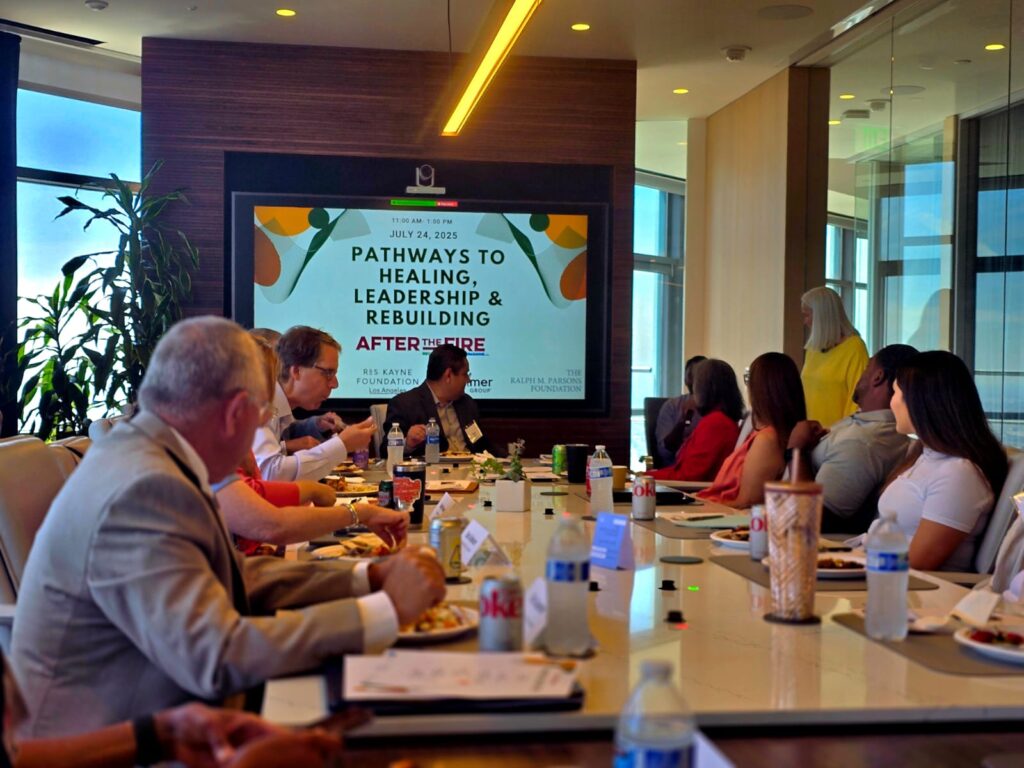
Through our Community to Community program, we connect wildfire-impacted leaders with peers who have navigated recovery in other regions. What we learn from those frontline communities, we bring to national organizations so they can better serve survivors. We pledge to stay for the long haul — at least three years — if the community wants us there.
On this page, we document each fire we have walked alongside: what burned, who was there, what the community faced, and what we learned. We share these not as a hierarchy of disasters, but as a landscape of contexts.
Helping Communities
Recover Together
Our services are always free of charge. We depend on our partners and donors to support this work.
Our Work Across Fires
North Bay Fires
Tubbs, North Bay, Kincade, LNU, Glass
2017-2020 • CA
Suburban / Rural
Camp Fire
2018 • CA
18,804 structures
Rural Town
Woolsey Fire
2018 • CA
1,643 structures
Rural Residential / Surburban
CZU Lightning Complex
2020 • CA
1,490 structures
Rural / Forested
Dixie Fire
2021 • CA
1,311 structures
Frontier
Oregon Fires
Almeda, Santiam, Holiday Farm
2020 • OR
4,636 structures
Urban Interface / Rural
Marshall Fire
2021 • CO
1,084 structures
Suburban
Maui Fires
Lahaina, Kula
2023 • HI
3,500+ structures
Historic Town / Rural Upcountry
Active
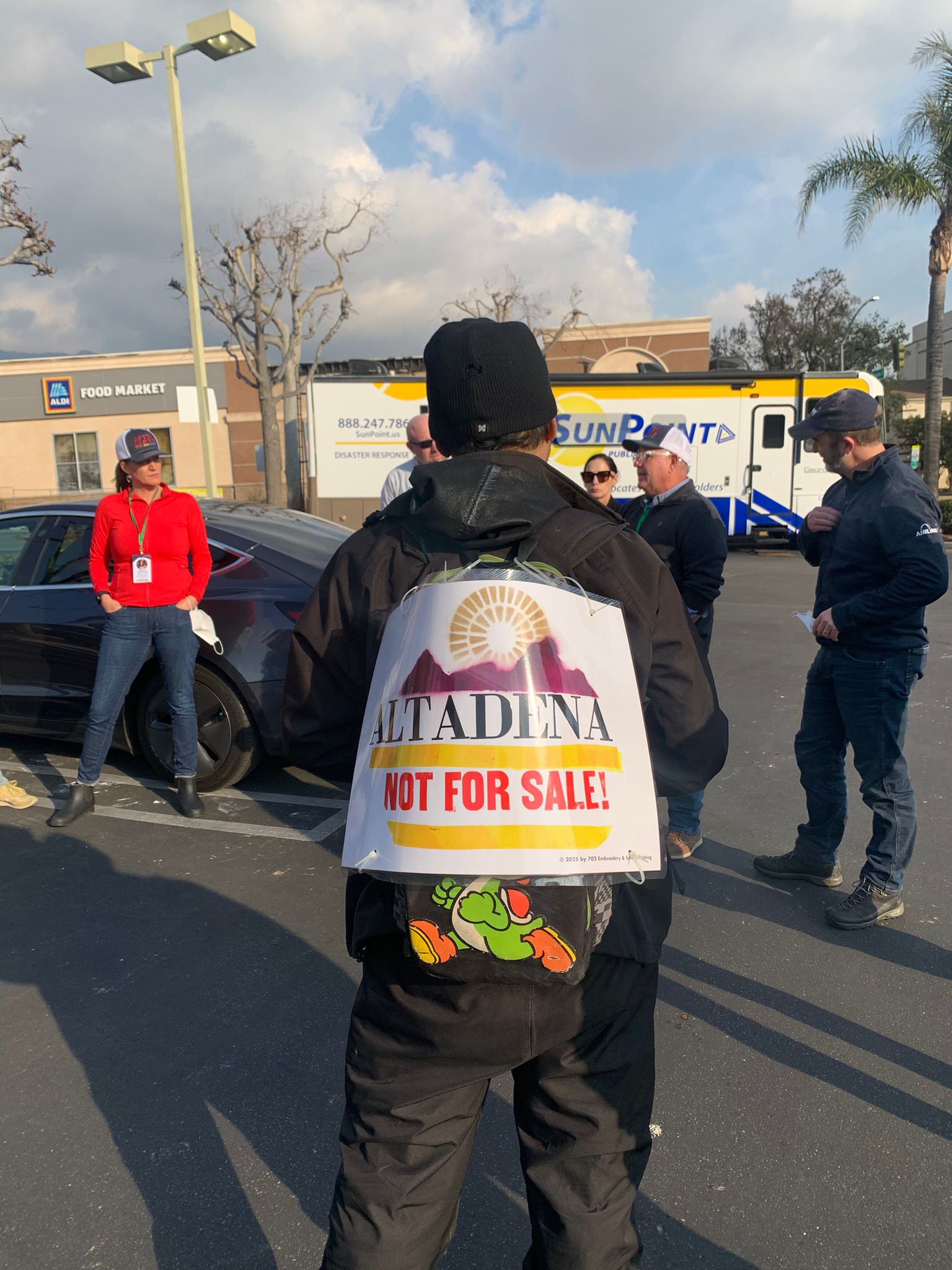
Los Angeles Fires
Palisades, Eaton
2025 • CA
16,251 structures
Urban Interface
Active
Meet Our
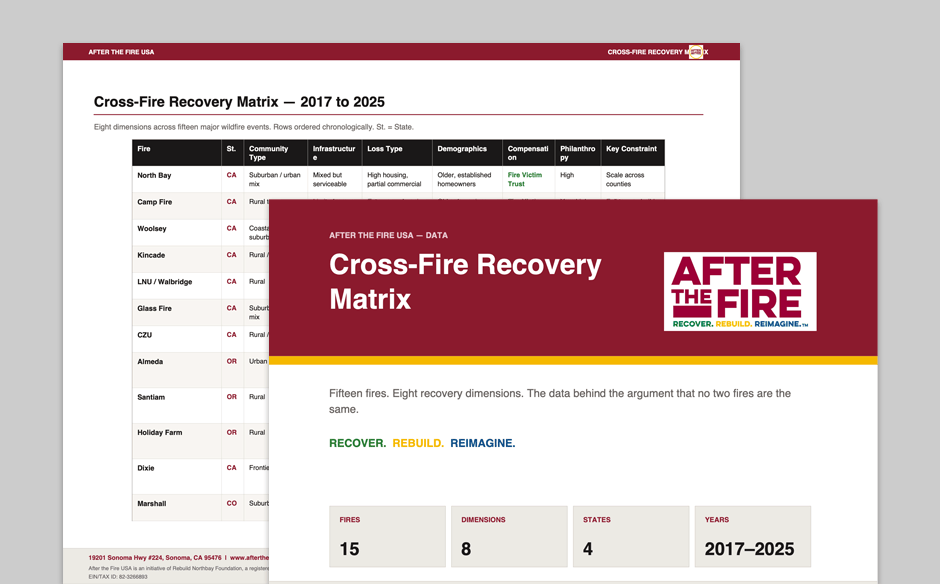
Cross-Fire Matrix
Media coverage of wildfire disasters defaults to structure counts — a single number that shapes policy, drives comparisons, and influences where resources go. The Cross-Fire Recovery Matrix replaces that shortcut with a more honest picture. By mapping 15 fires across the variables that actually determine recovery outcomes — infrastructure, demographics, compensation pathways, philanthropy, and governance capacity — it gives communities and policymakers a tool for understanding what raw loss numbers hide.