
Sept. 28 Digest: This Week in Wildfire Recovery News
This is a digest of selected news and media that emerged over the last week related to wildfire emergencies, recovery efforts, and resilience building efforts in the American West.
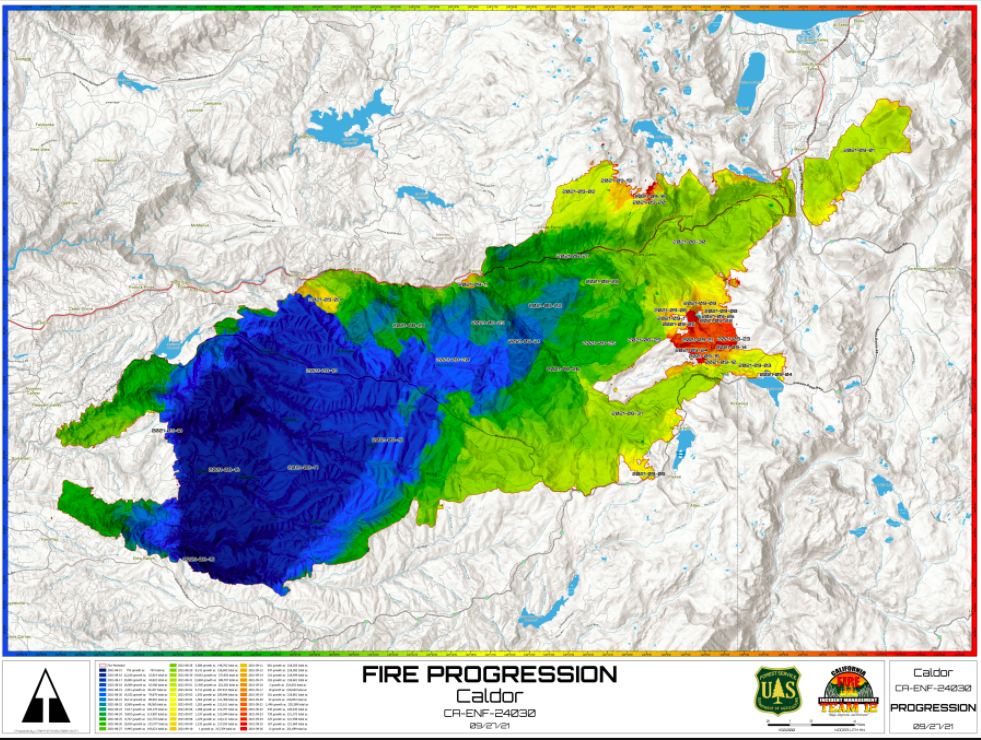
These Maps Show Where Prescribed Burns Helped Curb the Caldor Fire's Rapid Growth
From San Francisco Chronicle, By Yoohyun Jung and Paula Friedrich | September 20, 2021
Caldor Fire Maps
From Inciweb | September , 2021
Incident overviews, announcements, and emergency information concerning the Caldor Fire
The Dixie Fire is Almost Out, But it's Inhospitable 'Moonscapes' Remain
From The Guardian, by Gabrielle Canon | Sept. 22, 2021
The Caldor Fire Destroyed Nearly Two-Thirds of Grizzly Flats. Burned-Out Residents are Determined to Reclaim Their Town
From SF Chronicle, by Julie Johnson \ September 26, 2021
Residents of Grizzly Flats form groups within their community to band the community together and work to rebuild homes, businesses, and financial stability for their town.
Wildfire Conference Talks Lessons Learned, Future for Fighting Fire
From The Daily Sentinel, by Dan West | Sept. 24, 2021
Two keynote addresses given at the Colorado Wildland Fire Conference by Brian Fies and Bill Hahnenberg discuss how advancements in technologies and communications need to continue to improve in order to battle the ongoing droughts and fire risks
What Happens After a Mudflow Destroys Your Home? The Hidden Costs of Rebuilding Post-Fire
From KCET, by Rebecca Miller \ September 24, 2021
The multiple barriers faced when rebuilding in a post-fire landscape including where to build your property, legal restrictions, and financial burdens such as material, property surverying, and insurance costs.
Paradise Community Village Restored on the Ridge
From Action News Now, by Tori Apodaca | Sept. 23, 2021
The Community Housing Improvement Program completes affordable housing unit in Paradise Community Village, where original residents and newcomers are now able to move into a place that closely resembles the place pre-Camp Fire.
Marin Wildire Agency Introduces Evacuation Map App
From Marin Independent Journal, by Adrian Rodriguez | September 23, 2021
With fire danger looming over Marin County, authorities launch new interactive map application to assist in evacuating residents and help show which zones are in danger.
Land Tender App Launched to Help Prevent Wildfires in Tahoe, Beyond
From Tahoe Daily Tribune | September 24, 2021
Vibrant Planet launches new app that will provide electronic based data, giving land managers more accurate information concerning hazardous timber and fuels
Wildfire Fuel Mapper
From Pepperwood Preserve
An online application that takes a regional approach to protect ecosystems through forest management and reducing hazardous wildland fuels.
Draft California Fire Codes Include Wildfire Hazard Tool
From Jefferson Public Radio, by April Ehrlich | September 26, 2021
The National Institute of Standards and Technology have developed a framework consisting of electronic maps that may assist with assessing wildfire hazards
More Americans are Moving into Fire-Risky Areas
From Bloomberg, by Laura Bliss and Marie Patino | September 24, 2021
Recent trends in the U.S. show demand for houses in wildfire zones increase since 2020, despite increased risk of disaster.
Scientists Spar Over Whether Burned Trees Fuel or Calm Future Wildfires
From NBCBay Area, by Bigad Shaban, Robert Campos, Michael Horn | Sept. 22, 2021
Experts debate on whether dead and burned tree logs will add fuel to future fires or if letting dead trees absorb moisture from the ground and remain will slow down the burns.
Hungry Goats Prevent Fires, Remove Invasive Plants in San Francisco Hills
From SF Chronicle, by Caron Creighton | September 23, 2021
Fire mitigation can help even in the city, where San Francisco's nonprofit City Grazing sends out goats to eat invasive plants and undergrowth and minimize dry patches that contribute to fire risk.
California's Megafires Spur Insurers to Send in Special, Private Crews Before a Blaze Hits
From SF Chronicle, by Gregory Thomas | September 21, 2021
As the wildfires continue to increase, pre-incident squads are sent in by insurers to prepare properties in fire-danger zones in the hopes minimize possible costs associated with fire damage.
The West Urgently Needs Federal Funds to Address Drought, Wildfire, and Climate Change
OPINION From Aububon by Karyn Stockdale | September 25, 2021
Why Congress must address the urgent climate and drought conditions in the West through new funding bills, citing environmental dangers fueled by snowbank and reservoir levels at historic lows.